

New Delhi [India], March 31: India’s undergraduate education landscape is undergoing a significant transformation, marked by the emergence of new-age institutions and a growing acceptance of interdisciplinary, untraditional programs. For decades, the narrative around higher education in India was largely dominated by conventional pathways such as engineering, medicine, and commerce, often pursued through highly competitive entrance examinations. Today, however, a new ecosystem is taking shape, one that emphasizes holistic development, critical thinking, and global readiness.
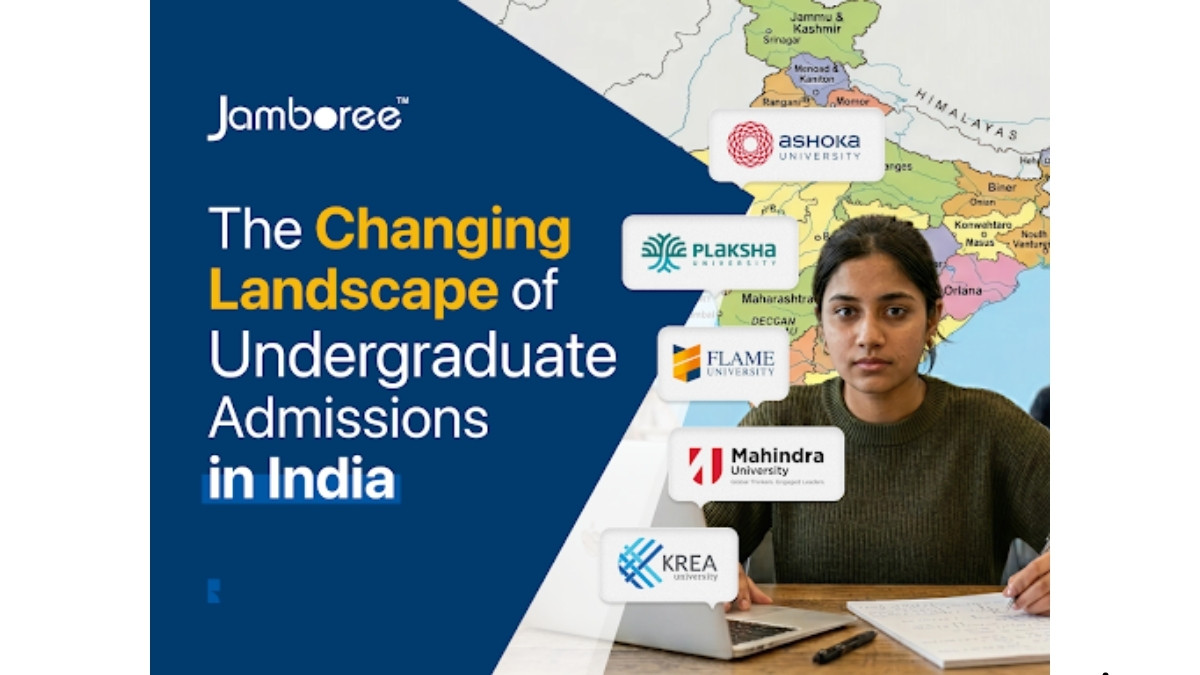
At the forefront of this shift are institutions such as Ashoka University, Plaksha University, Krea University, FLAME University, and Mahindra University. These universities are redefining undergraduate education by offering flexible curricula, interdisciplinary majors, and a strong emphasis on real-world application.
A Shift Toward Interdisciplinary Learning
Unlike traditional degree structures, these institutions allow students to explore a wide range of subjects before committing to a specialization. This flexibility enables learners to combine disciplines such as economics with data science, psychology with marketing, or computer science with design.
For instance, Ashoka University has championed the liberal arts model in India, encouraging students to develop a broad intellectual foundation alongside deep expertise in a chosen field. Similarly, Plaksha University integrates technology education with design thinking and entrepreneurship, preparing students for complex, real-world challenges.
This shift is not merely academic, but represents a broader change in mindset. Students and parents alike are increasingly valuing creativity, adaptability, and problem-solving skills over rote learning and narrow specialization.
Evolving Admissions Criteria: Beyond Test Scores
One of the most notable changes accompanying this transformation is the evolution of admissions processes. These new-age institutions are moving away from a singular reliance on entrance exams and instead adopting a more holistic evaluation framework.
At Ashoka University, for example, admissions are based on multiple components:
- Class 10 Academic Performance – Provides an early indicator of consistency and academic grounding.
- Class 12 Scores/SAT/Ashoka Aptitude Test (AAT) – Scores are normalized, and the highest performance among these is considered, offering flexibility to applicants from diverse academic backgrounds.
- Personal Essay – A critical component that allows students to showcase their voice, aspirations, and individuality.
- Personal Interview – Designed to assess communication skills, intellectual curiosity, and overall fit with the university’s ethos.
Similarly, Plaksha University incorporates a blend of academic and aptitude-based assessments. In addition to considering scores from exams such as JEE Main, applicants undergo a technical skills interview that evaluates their problem-solving abilities and conceptual understanding.
This multidimensional approach ensures that students are evaluated not just on their academic achievements, but also on their potential, personality, and passion.
The Role of Structured Preparation
As admissions processes become more nuanced, the need for structured preparation has grown significantly. This is where specialized programs like the Ace India initiative by Jamboree Education are playing a crucial role.
The Ace India Undergrad Admissions Program is designed to guide students through every stage of the application journey – from test preparation to profile building and interview readiness. With institutions placing increasing emphasis on essays, interviews, and extracurricular engagement, students require more than just academic excellence to stand out.
For applicants targeting Ashoka University, for instance, preparation involves not only optimizing standardized test scores but also crafting compelling personal narratives. Jamboree’s mentorship helps students articulate their experiences and aspirations effectively, ensuring their applications resonate with admissions committees.
In the case of Plaksha University, where technical interviews form a key component, targeted preparation becomes even more critical. Students must demonstrate not just theoretical knowledge, but also the ability to apply concepts in unfamiliar scenarios. Structured coaching can help bridge this gap, equipping students with the confidence and skills needed to excel.
Current Affairs and Holistic Awareness
Another emerging trend in UG admissions, particularly at institutions like FLAME University, is the emphasis on awareness beyond textbooks. Students are often assessed on their understanding of current affairs, global issues, and socio-economic trends.
This reflects a broader educational philosophy: universities are seeking individuals who are not only academically capable but also socially aware and intellectually engaged. Preparing for such evaluations requires consistent exposure to news, analysis, and informed discussions.
Programs offered by Jamboree Education incorporate current affairs preparation as a core component, helping students stay informed and develop well-rounded perspectives. This not only strengthens their performance in admissions processes but also prepares them for meaningful participation in academic and professional environments.
A Welcome Transformation
The rise of institutions like Ashoka, Plaksha, Krea, FLAME, and Mahindra signals a broader democratization of higher education choices in India. Students are no longer confined to a limited set of “acceptable” career paths. Instead, they have the freedom to pursue diverse interests and carve unique trajectories.
This transformation is also aligned with global trends, where interdisciplinary education and experiential learning are becoming the norm. Indian universities are increasingly positioning themselves as global players, attracting international faculty, fostering research, and building industry partnerships.
Conclusion
India’s undergraduate education landscape is at an inflection point. The emergence of innovative institutions and holistic admissions processes is reshaping how students approach higher education. Success is no longer defined solely by exam scores, but by a combination of academic achievement, personal insight, and real-world readiness.
As competition intensifies and expectations evolve, students must adapt to this new paradigm. Structured guidance, such as that offered through initiatives like Ace India by Jamboree Education, can provide a significant advantage, helping applicants navigate complexity and present their best selves.
If you object to the content of this press release, please notify us at pr.error.rectification@gmail.com. We will respond and rectify the situation within 24 hours.
