


Anuj Agrawal, Founder & CEO Of Zyon Group
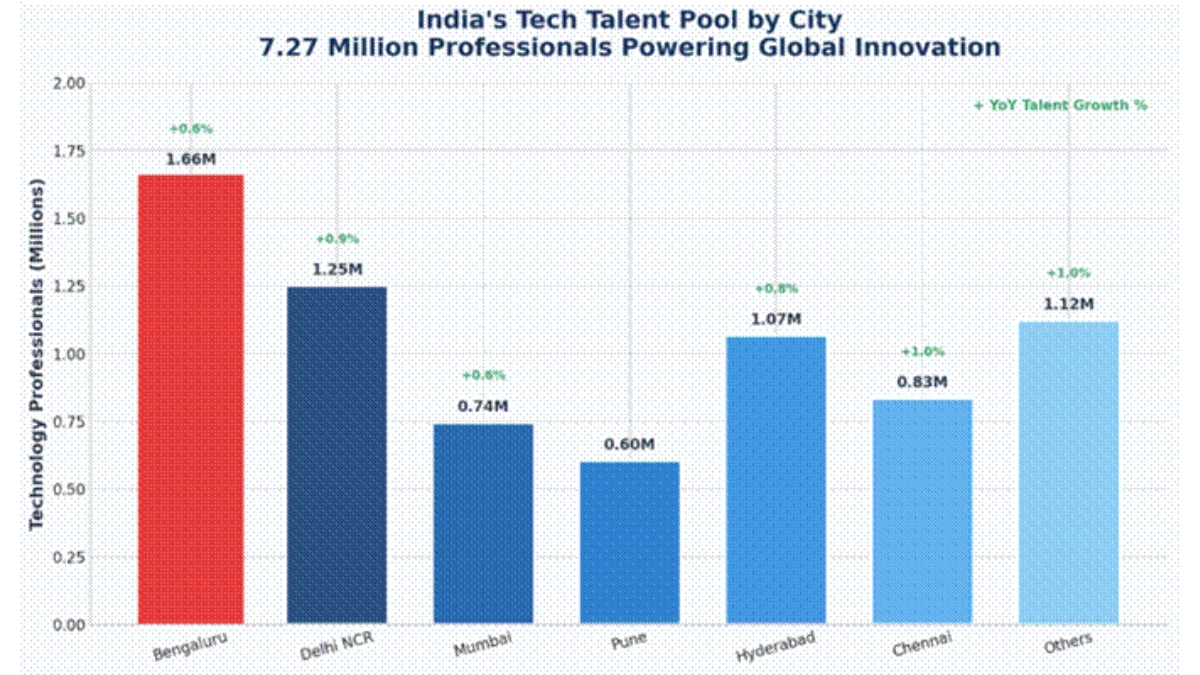
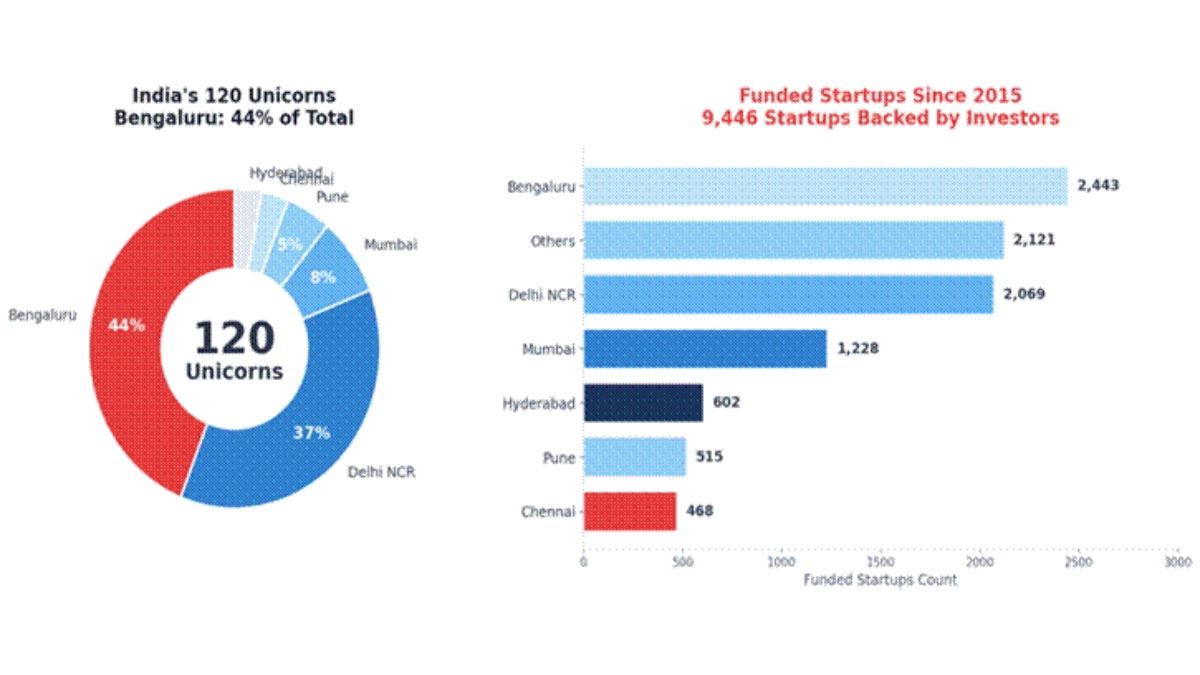
Bengaluru (Karnataka) [India], May 12: Bengaluru has been under siege—not from competition, but from criticism. Headlines decry its traffic, infrastructure gaps, and strained public systems. But here’s what the critics miss: Bengaluru’s problems are symptoms of unprecedented success. When a city hosts 875 GCC Units, employs 1.65 million technology professionals, and nurtures 53 unicorns—more than any other Indian city—growing pains are inevitable.
India’s ambition to become a $10 trillion economy by 2030-35 doesn’t hinge on solving Bengaluru’s traffic. It hinges on building ten more Bengalurus.
The Numbers Tell a Remarkable Story
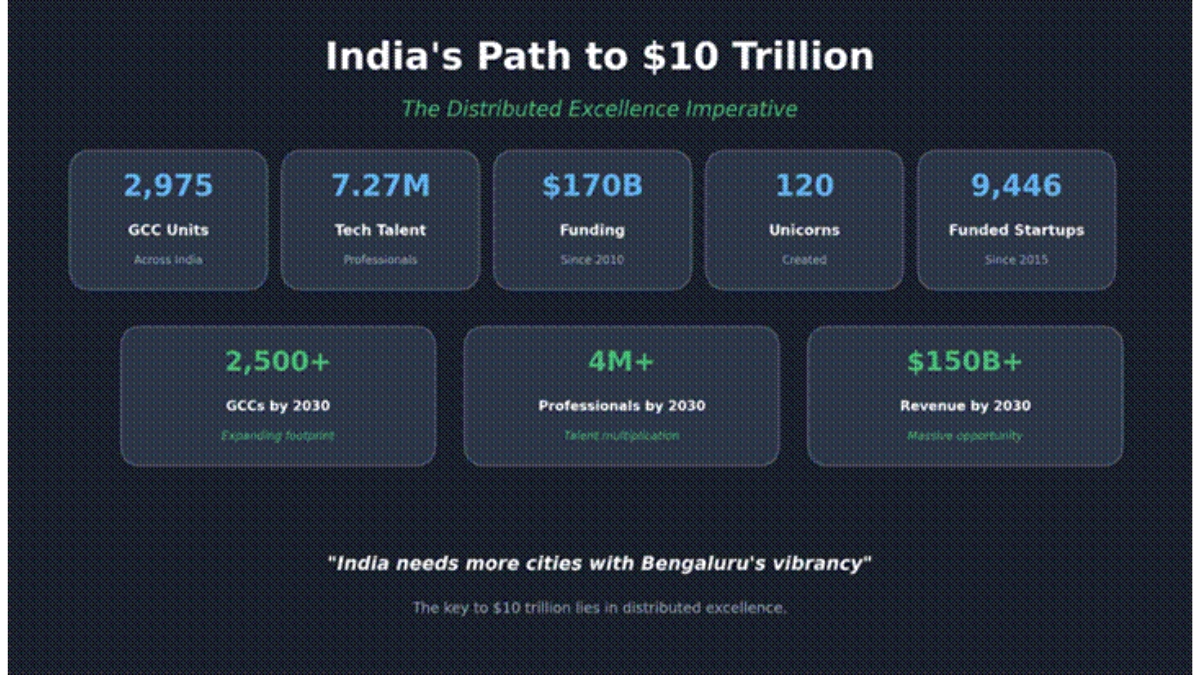
India’s technology ecosystem has reached unprecedented scale. With 2,975 GCC Units employing over 1.9 million professionals and generating $65 billion in annual revenue, India hosts 50% of all global capability centers worldwide. The ecosystem’s total economic impact approaches $241 billion, contributing nearly 2% to national GDP.
Figure 1: India’s GCC Units Landscape
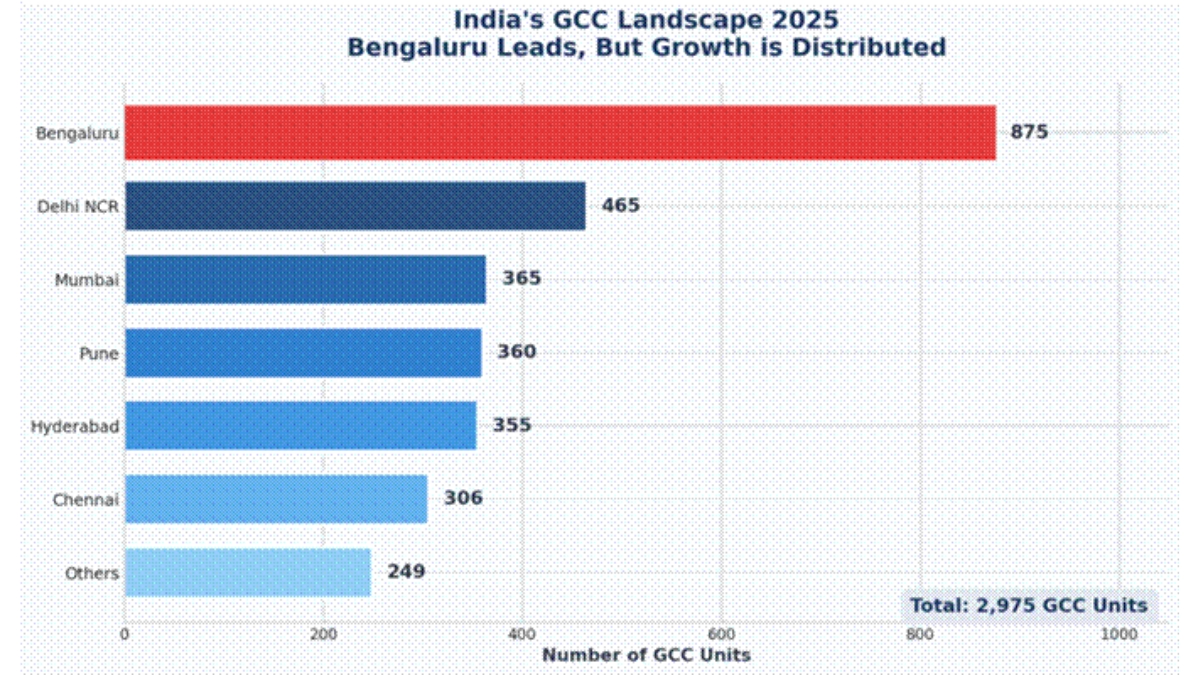
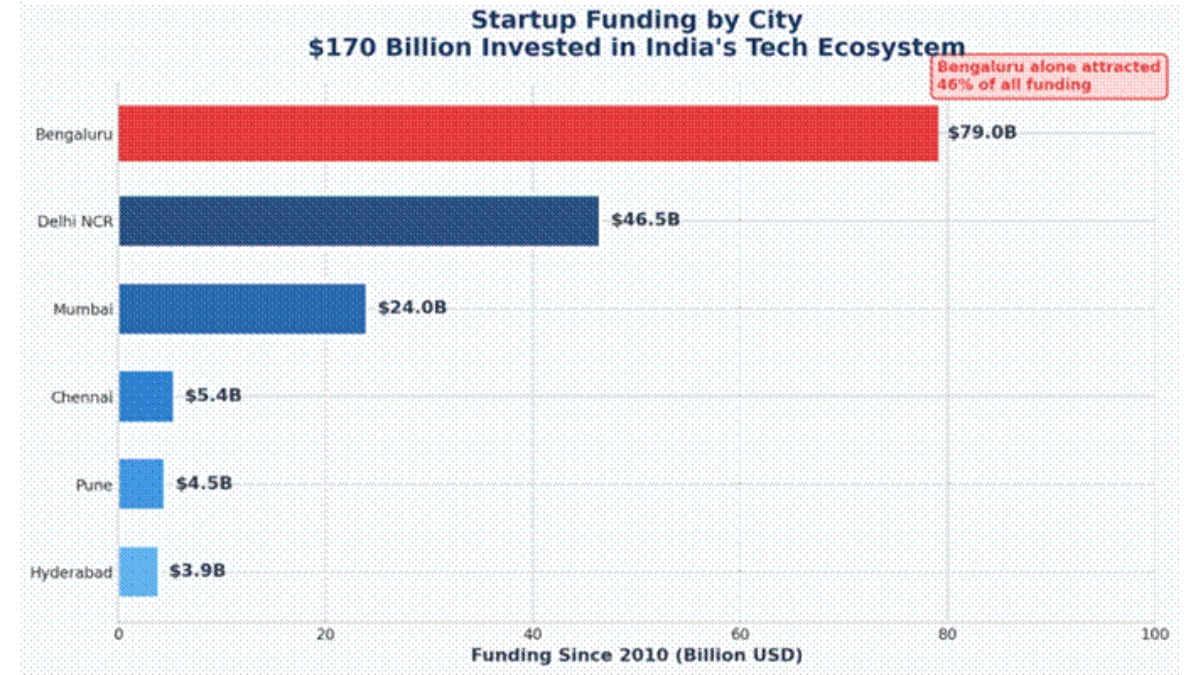
Bengaluru leads with 875 GCC Units, $79 billion in startup funding since 2010, and 53 unicorns (44% of India’s total). Delhi-NCR follows with 465 GCC Units and the fastest talent growth at 0.9% YoY. Hyderabad has emerged as the dark horse with 355 GCC Units and proactive policies. Mumbai, Pune, and Chennai collectively contribute 1,031 GCC Units. Together, these six metros host 92% of India’s GCC Units—a concentration that represents both strength and vulnerability.
Figure 2: Tech Talent Distribution
Why Bengaluru Leads—And Why That’s Not Enough
Despite criticism, Bengaluru isn’t slowing down. In 2025, one-third of all new GCC Units still chose Bengaluru. The reason: ecosystem depth cannot be replicated overnight—2,443 funded startups, proximity to IISc and IIMs, the deepest talent pools in AI and cloud computing, and two decades of institutional knowledge.
Karnataka’s ₹19,000 crore infrastructure commitment signals recognition that this engine must keep running. But here’s the strategic insight: Bengaluru’s ceiling is India’s ceiling. A single-city narrative caps our potential at the carrying capacity of one urban system.
Figure 3: India’s Unicorn & Funded Startup Ecosystem
The Distributed Excellence Imperative
India’s path to $10 trillion runs through distributed innovation. Tier-2 cities are gaining momentum—Coimbatore (60+ GCC Units), Kochi, Ahmedabad, and Mysuru are strategic frontiers. The economics are compelling: 25-30% lower costs, 10-15% lower attrition, and fresher talent pools. Over 215 GCC Units now operate in emerging locations.
This isn’t about abandoning metros; it’s about de-risking India’s value proposition. The 2025 Union Budget’s national GCC framework recognizes this, extending focus beyond metro hubs.
Figure 4: Startup Funding Distribution (Since 2010)
From Criticism to Collaboration
The public spats between industry leaders and government officials serve no one. What’s needed is a collaborative framework. State governments must compete on infrastructure, not just incentives—Karnataka’s GCC policy is being mirrored by Telangana and Tamil Nadu. Industry must invest in Tier-2 expansion. Public-private partnerships must scale. And skilling initiatives must reach Tier-2 and Tier-3 cities—India produces 1.5 million engineers annually.
The $10 Trillion Question
By 2030, India’s GCC sector is projected to reach $150 billion+ in revenue, employ 4 million+ professionals, and host 2,500+ capability centers. This growth will either concentrate in existing hotspots—straining infrastructure—or distribute across vibrant tech ecosystems.
Bengaluru’s critics are right that the city needs better infrastructure. But they miss the larger point: India needs more cities with Bengaluru’s vibrancy—cities so successful that their success strains their systems. Hyderabad, Chennai, Pune, and Delhi-NCR are approaching that threshold. Coimbatore, Kochi, and a dozen others are building the foundations.
The path from criticism to collaboration runs through a simple recognition: we’re not competing against each other. We’re racing against time and global competition to build the distributed excellence that transforms India from a $3.5 trillion economy to a $10 trillion powerhouse.
Figure 5: The Path to $10 Trillion
Bengaluru has shown what’s possible. Now, India must multiply that possibility—not replace it.
Data sources: NASSCOM-Zinnov GCC Landscape Reports; BCG India Reports; foundit Insights Tracker 2025
