

Mumbai (Maharashtra) [India], July 4: Artificial intelligence has spent the past few years breaking records, attracting billions in investment, and convincing every technology company that adding the letters “AI” to a product description is apparently today’s version of a magic spell. Now, the world’s policymakers are attempting something considerably less glamorous but arguably more important—figuring out who writes the rules before the technology writes them instead.
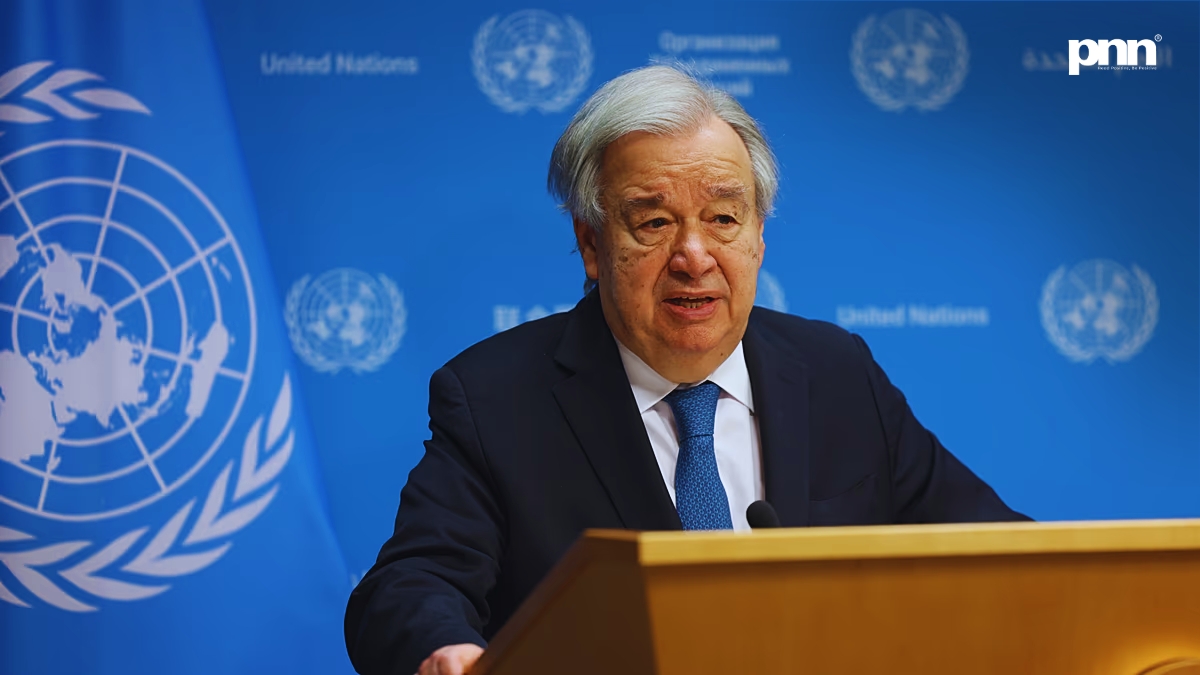
In a significant step toward global Artificial intelligence governance, the United Nations, together with the International Telecommunication Union (ITU), has launched the AI for Good Global Commission. The initiative brings together governments, researchers, technology companies, and international organisations to establish common principles for the safety, governance, and responsible innovation of Artificial intelligence. The commission is scheduled to hold its inaugural meeting in Geneva next week, where discussions are expected to focus on balancing innovation with accountability.
The announcement arrives at a time when artificial intelligence is evolving faster than most regulatory frameworks can comfortably keep pace with. If Artificial Intelligence has become the world’s newest industrial revolution, then governance has finally decided to RSVP.
A Global Conversation That Was Becoming Impossible To Ignore
Artificial intelligence is no longer confined to research laboratories or Silicon Valley boardrooms. It powers healthcare diagnostics, financial services, education, manufacturing, cybersecurity, and even national defence strategies.
That rapid expansion has exposed an uncomfortable reality.
Technology develops globally.
Regulation usually doesn’t.
The newly announced AI for Good Global Commission aims to bridge that gap by encouraging international cooperation rather than fragmented national approaches. The initiative builds upon years of discussions led by the United Nations and the ITU around ethical Artificial Intelligence development, digital inclusion and responsible technological progress.
Unlike national legislation, the commission seeks to create dialogue that extends across borders—because algorithms rarely stop at immigration checkpoints.

Why AI Governance Has Become A Global Priority
The conversation surrounding AI has evolved dramatically since generative Artificial Intelligence entered mainstream use.
Governments are now debating issues including copyright, misinformation, cybersecurity, employment, data privacy, and national security. Companies continue releasing increasingly capable Artificial Intelligence models, while regulators attempt to understand technologies that often evolve faster than policy documents can be drafted.
The commission intends to examine areas such as:
- International AI safety standards.
- Responsible deployment of frontier AI systems.
- Cross-border regulatory cooperation.
- Digital inclusion and equitable AI access.
- Ethical innovation frameworks.
None of these topics are particularly simple.
Then again, neither is artificial intelligence.
The Opportunity Behind Global Standards
Supporters argue that international coordination could benefit both governments and businesses.
Shared governance principles may reduce regulatory uncertainty, improve public trust, and encourage companies to innovate within clearer ethical boundaries. For emerging economies, common standards could also make participation in the global Artificial intelligence ecosystem more accessible.
Potential advantages include:
- Greater international collaboration.
- Improved public confidence in AI systems.
- Reduced regulatory fragmentation.
- Clearer guidance for technology developers.
- Stronger emphasis on AI safety and transparency.
The global Artificial Intelligence market itself is projected to exceed $1 trillion in value during the coming decade, making governance not merely a political discussion but an economic necessity.

The Challenges Are Far More Complicated
Global cooperation sounds elegant in conference halls.
Implementation is considerably messier.
Countries often have different priorities regarding privacy, surveillance, innovation and national competitiveness. Technology companies also operate under varying legal systems, making universal standards difficult to enforce.
Critics have long argued that international commissions sometimes produce ambitious recommendations but limited practical enforcement. Others worry that excessive regulation could inadvertently slow innovation while failing to keep pace with rapidly evolving Artificial intelligence capabilities.
In technology, yesterday’s policy can become tomorrow’s historical document remarkably quickly.
Innovation And Regulation Don’t Have To Be Rivals
One misconception surrounding Artificial intelligence governance is that regulation automatically opposes innovation.
Increasingly, industry leaders argue the opposite.
Predictable rules often encourage investment by reducing uncertainty for developers, enterprises, and consumers alike. Responsible governance can establish trust without necessarily limiting technological advancement, provided regulations remain flexible enough to evolve alongside innovation.
Finding that balance will likely become one of the commission’s greatest challenges.
Nobody wants artificial intelligence to become the digital equivalent of the Wild West.
Nobody wants innovation trapped inside endless paperwork either.
The Bigger Story Isn’t About Geneva
The first meeting may take place in Geneva.
The real conversation is global.
Artificial intelligence is reshaping economies, education, healthcare, and international competition at a remarkable speed. The creation of the AI for Good Global Commission signals growing recognition that governance can no longer remain an afterthought.
Whether the initiative ultimately produces binding international standards or simply strengthens cooperation remains to be seen. Even so, bringing governments, researchers, and technology companies to the same table represents a meaningful step toward addressing challenges that no single nation can solve alone.
Perhaps the most remarkable development isn’t that the United Nations has launched another international commission.
It’s that artificial intelligence has become influential enough for the world to realise that governing tomorrow’s technology requires cooperation today.
Because if machines are learning from humanity, it might be wise for humanity to agree on the lesson plan first.
