

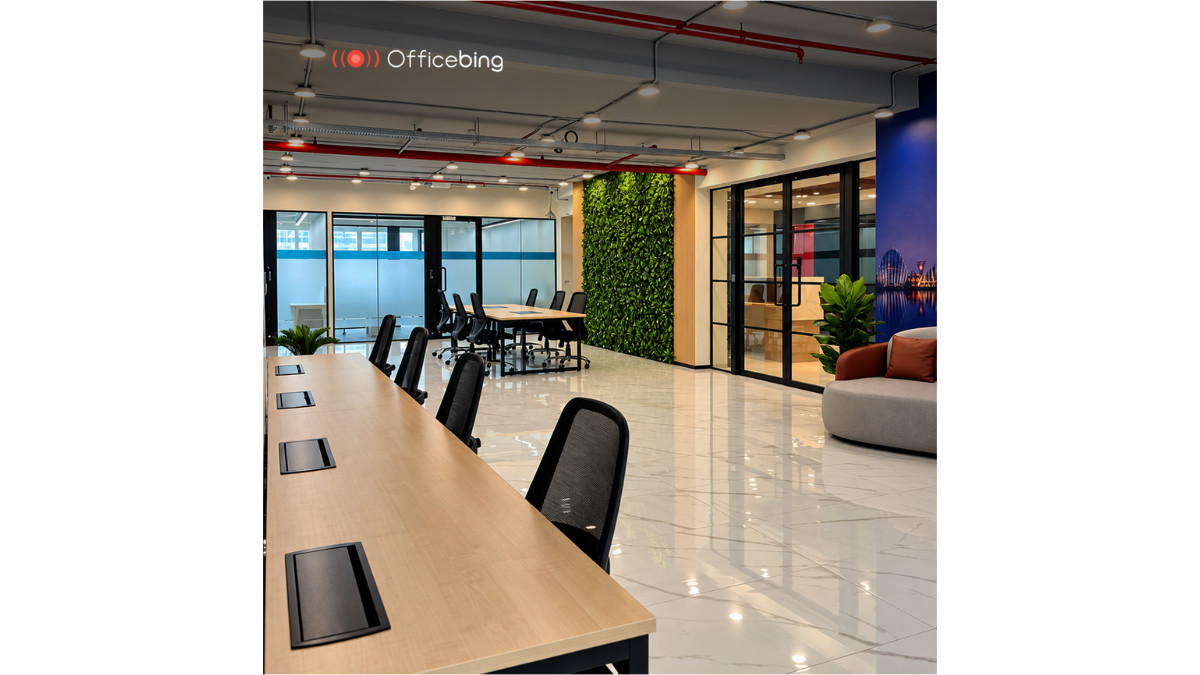
Navi Mumbai (Maharashtra) [India], November 18: A workplace is rarely designed for just one kind of employee. Sales teams may benefit from collaborative environments, while finance departments often require quieter spaces for concentration. Human resources teams need privacy for confidential conversations, and leadership teams require settings for strategic discussions.
Research supports the need for different workplace environments. Gensler’s Global Workplace Survey 2025, covering 16,809 office workers across 15 countries, found that working patterns vary by role and industry. Its analysis identified seven types of in-person collaboration, ranging from confidential conversations and informal meetings to scheduled team sessions and co-creation workshops, with different settings preferred for different activities. This reinforces the importance of designing workplaces around how employees work rather than applying the same layout across every department.
This is where workplace planning becomes more than a question of finding desks, chairs and meeting rooms. For businesses, the challenge is to create an office that supports different functions without compromising comfort, productivity or the efficient use of space.
Officebing approaches workplace planning with this need in mind, helping businesses look beyond a standard office layout and consider how their teams actually work.
Understanding How Different Teams Work
Every department has its own rhythm. Sales and business development teams often benefit from spaces that encourage quick conversations, team discussions and frequent collaboration. A rigid seating arrangement may not work well for employees who spend much of their day coordinating with colleagues or preparing for client interactions.
On the other hand, finance, legal and research teams may require quieter surroundings, fewer interruptions and greater privacy. Human resources departments need a balance between accessible workspaces and rooms where employees can discuss sensitive matters comfortably.
Technology teams may require a combination of focused workstations, collaborative areas and spaces for internal discussions. Leadership teams, meanwhile, need meeting rooms that support decision-making without disrupting the daily activities of other employees.
Treating every department identically can create unnecessary friction, particularly when employees need different levels of privacy, collaboration and concentration.
A notable example is Deloitte’s Amsterdam office, The Edge, where workplace planning moved away from permanently assigned desks towards activity-based working. According to a case study published by the University of Cambridge, Deloitte sought to reduce desk numbers by 36% while accommodating a projected 78% increase in employees. The redesigned workplace introduced different settings for individual work, meetings and collaboration, supported by technology that helps employees identify suitable spaces. A separate case study by workplace technology provider Mapiq reports that the approach supported workforce growth while reducing workplace costs per employee and improving collaboration. The example demonstrates how planning around actual work activities, rather than assigning identical spaces to every employee, can support greater space efficiency.
Moving Beyond the One-Size-Fits-All Office
Consider a company moving into a new office with 100 employees across five departments. Allocating twenty desks to each team might appear fair and straightforward. However, the arrangement may not reflect actual working patterns.
One department might regularly host client meetings, while another needs additional storage or quieter work areas. Some employees may work remotely on certain days, while others need to be present for daily coordination.
Instead of relying solely on headcount, businesses can evaluate factors such as team size, frequency of collaboration, confidentiality requirements, meeting schedules and future hiring plans. This allows office layouts to reflect practical needs rather than assumptions.
For Officebing, this approach highlights the importance of understanding the organisation before planning its workplace. The objective is not simply to accommodate employees but to make the available space work effectively for different functions.
Balancing Collaboration, Privacy and Flexibility
Workplace planning also involves managing competing priorities. Open layouts can encourage interaction, but excessive noise may affect concentration. Private cabins offer discretion, but too many enclosed spaces can limit collaboration and reduce the flexibility of the floor plan.
A balanced office may combine open workstations, enclosed meeting rooms, quiet zones and shared collaboration areas. The right mix depends on the company’s operations, culture and budget.
Flexibility is equally important. As businesses hire new employees, restructure departments or introduce hybrid working, their space requirements can change. Planning with these possibilities in mind can help organisations avoid frequent and expensive redesigns.
Designing for the Business, Not Just the Floor Plan
The most effective workplace is one in which employees can perform their jobs without constantly working around limitations in the environment.
The most effective workplace is one in which employees can perform their jobs without constantly working around limitations in the environment. When teams have access to spaces suited to their responsibilities, everyday activities, from focused analysis to client presentations, can become easier to manage.
For businesses, this means treating office planning as an operational decision rather than a purely aesthetic exercise. For Officebing, the opportunity lies in helping organisations align their workplace requirements with the practical realities of how different teams function.
Ultimately, one office does not have to mean one way of working. By recognising the needs of individual departments while maintaining a cohesive environment, businesses can create workplaces that are more adaptable, functional and prepared for growth.
