

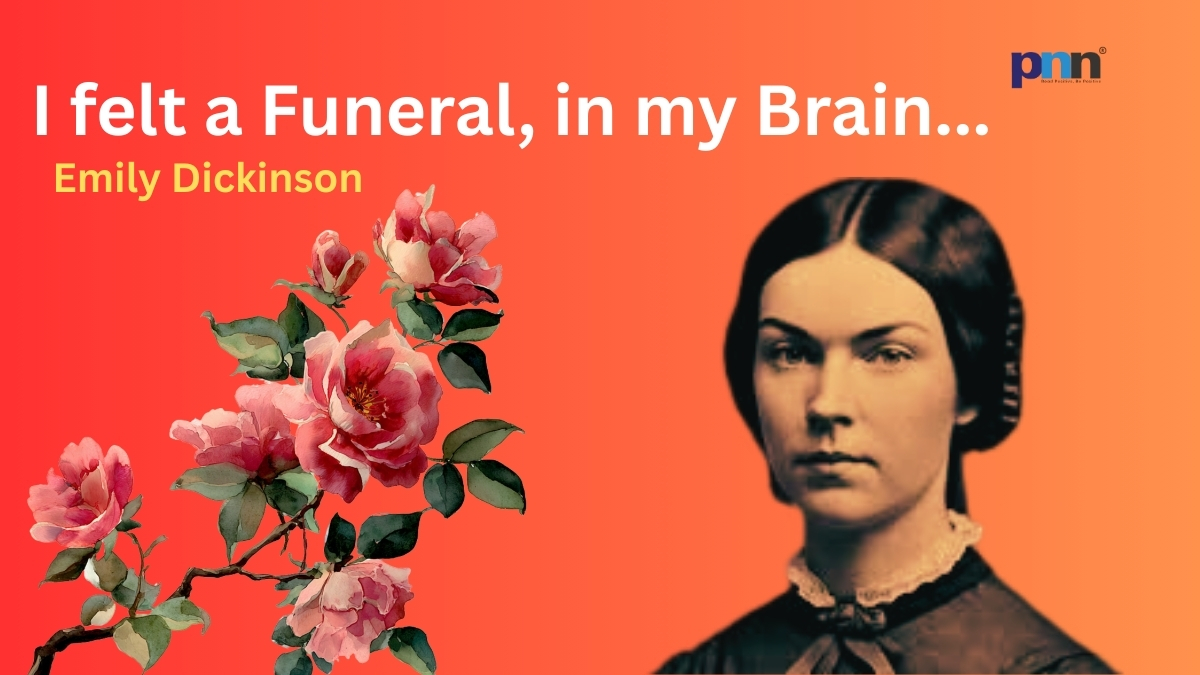
London [United Kingdom], January 24: Emily Dickinson still feels modern because she never tried to be legible. That’s the part people keep circling without saying out loud. She didn’t smooth the edges. She didn’t explain herself. She didn’t care if you “got it,” and she definitely didn’t care if you liked her. “Tell all the truth but tell it slant—” wasn’t a clever line. It was an operating principle. That alone puts her closer to the present than most writers embalmed by syllabi.
She wrote like someone who understood the mind is not a neat place. Thoughts interrupt each other. Meaning leaks. Certainty collapses mid-sentence. So she used dashes the way people now use half-finished texts. She broke grammar because grammar lied about how thinking actually works. “I felt a Funeral, in my Brain,” she wrote, and then let the poem stagger. And the poems didn’t resolve. They just… stopped. Like the feeling does. Like the anxiety does. Like the grief that never quite wraps itself up.
People love to talk about her isolation. The white dress. The upstairs room. Fine. But that’s not why she feels current. Plenty of recluses wrote safely ornamental things. Dickinson wasn’t ornamental. She was invasive. Her poems read less like finished objects and more like private notes that accidentally survived. “This is my letter to the World / That never wrote to Me—” isn’t wistful. It’s confrontational. You’re not invited. You’re overhearing.
And the subjects. Death, obviously. Not the gothic kind. The administrative kind. The waiting room kind. The quiet, procedural certainty that it’s coming and you won’t be ready and nobody will explain the paperwork. “Because I could not stop for Death – / He kindly stopped for me—” is polite on the surface, chilling underneath. She wrote about death the way people now Google symptoms at 2 a.m., not to be dramatic, just to confirm the dread has a shape.
Then there’s power. God. Authority. She didn’t reject belief so much as interrogate it until it started sweating. Her poems argue with God the way modern people argue with systems—politely at first, then with growing suspicion, then with a kind of exhausted sarcasm. “The Bible is an antique Volume— / Written by faded Men,” she said, and left it there. She didn’t need atheism. She needed leverage.
And love. God, the love poems. They’re not sweet. They’re not even romantic in the way people expect. They’re territorial. Nervy. Sometimes humiliating. “Wild nights – Wild nights!” isn’t liberation. It’s exposure. She writes desire as something that disorganizes you, reduces you, sharpens you into someone you don’t fully recognize. No empowerment arc. No self-care ending. Just the admission that wanting someone can rearrange your moral furniture and leave it that way.
What really keeps her contemporary, though, is her refusal to perform. She didn’t publish. Not because she was shy. That’s the story people like because it makes her safe. But the poems themselves don’t sound shy. They sound controlled. Withholding can be a strategy. Silence can be editorial. “Publication – is the Auction / Of the Mind of Man—” wasn’t bitterness. It was policy.
She understood something we’re only pretending to rediscover: that exposure isn’t the same thing as connection. That being seen doesn’t automatically mean being understood. So she kept the work close. Let the poems exist without explanation. Let them misbehave.
Modern readers recognize that instinct immediately. We live inside platforms that demand constant articulation. Opinions, identities, brand clarity. Dickinson offers none of it. She doesn’t contextualize herself. She doesn’t clarify her stance. She doesn’t apologize for contradiction. One poem asserts something. Another quietly undoes it. “Much Madness is divinest Sense—” and the line never settles. Both stay.
And the voice. Flatly intense. Calm while saying unsettling things. She’ll state an emotional catastrophe like it’s a weather update. “After great pain, a formal feeling comes—” is basically dissociation before the term existed. That tone—controlled delivery, maximal content—is everywhere now. Podcasts. Essays. Therapy-speak with a blade hidden in it. She got there first.
There’s also the matter of scale. Her poems are short. Brutally short. They don’t give you room to relax. They hit and leave. Like a notification you didn’t want but can’t ignore. Like “Hope is the thing with feathers—” until you realize it’s not reassurance, it’s endurance. Like a sentence you reread and feel slightly worse afterward, which is how you know it worked.
She doesn’t teach lessons. She doesn’t offer comfort. She doesn’t even seem particularly invested in coherence. What she offers is recognition. The uncomfortable kind. The sense that someone else noticed the same quiet terror you did and didn’t try to dress it up. “I’m Nobody! Who are you?” isn’t cute. It’s a refusal.
That’s why she survives every reinvention. Academic. Feminist. Pop-cultural. Minimalist. She outlasts them because she never aligned herself with any program. She just wrote what she saw from where she was, without adjusting for reception.
Emily Dickinson feels modern because she wrote like someone who knew the future wouldn’t be clearer, kinder, or more stable. Just louder. “The Soul has Bandaged moments—” and some of them never heal. And she chose not to raise her voice to match the noise.
The poems are still there. Unresolved. Watching. Waiting for you to catch up—or not.
