

World Osteoporosis Day highlights the need for earlier diagnosis and coordinated care, alongside growing scientific interest in stem cells and regenerative medicine.
New Delhi [India], October 20: A broken bone after a minor fall can change far more than a person’s daily routine. It can affect mobility, confidence and independence, while creating prolonged caregiving needs. Yet osteoporosis, which weakens bones and increases fracture risk, often remains undetected until that first injury.
Ahead of World Osteoporosis Day on October 20, bone health deserves a wider conversation: how to prevent fractures today, and how emerging science could shape future approaches to bone repair. The International Osteoporosis Foundation estimates that globally, one in three women and one in five men over 50 will experience an osteoporotic fracture.
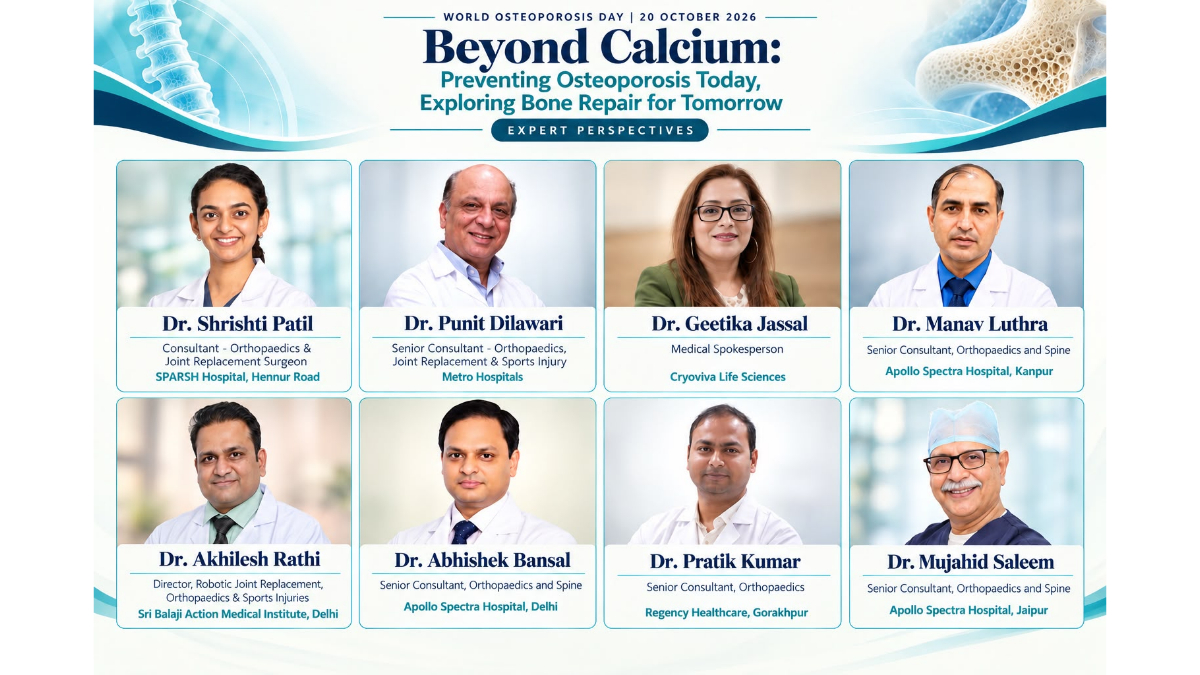
Considering the same Dr. Shrishti Patil, Consultant – Orthopaedics & Joint Replacement Surgeon, SPARSH Hospital, Hennur Road said: “A fracture following a minor fall should trigger an assessment of underlying bone health. Treating the injury alone can leave the patient vulnerable to another fracture. Care should include osteoporosis evaluation, appropriate medication, nutritional support and rehabilitation. Patients also need help rebuilding muscle strength and confidence in movement. Families must understand that recovery continues beyond surgery or removal of a cast. Our objective should be to restore independence while actively reducing the risk of the next injury.”
That next injury can arrive sooner than expected. The International Osteoporosis Foundation notes that subsequent fracture risk is particularly elevated during the first two years after an initial fracture, making follow-up an important window for prevention.
“Osteoporosis cannot be understood through calcium intake alone. Previous fractures, age, low body weight, family history and certain medicines can influence risk. A clinical assessment helps determine who needs bone-density testing and further investigations. Supplements may correct nutritional gaps, but patients at higher risk may also require prescribed treatment. The choice depends on the individual’s fracture risk and overall health. A personalised plan, reviewed regularly, is more useful than self-medicating with supplements and assuming the problem has been addressed.”explains Dr. Punit Dilawari, Senior Consultant – Orthopaedics, Joint Replacement & Sports Injury, Metro Hospitals
Alongside established care, researchers are investigating how cellular approaches might influence bone formation and repair. A 2025 systematic review examined bone marrow mesenchymal stem cell-derived extracellular vesicles in animal models of osteoporosis. The findings support further investigation, but do not establish a routine treatment for patients.
According to Dr. Geetika Jassal, Medical Spokesperson, Cryoviva Life Sciences,“Regenerative medicine is advancing research into how cells and their biological signals may support tissue repair, including bone regeneration. Mesenchymal stem cells and their derivatives are being investigated for their potential role in bone formation, although their use in osteoporosis remains investigational. Stem cell banking involves collecting and preserving biological material, with quality and viability being important considerations for potential clinical use. Cord blood has established applications in transplantation for certain blood, immune and inherited metabolic disorders. However, banking cord blood does not guarantee access to future osteoporosis treatments, as different cell types have distinct therapeutic applications. Responsible counselling must bridge scientific progress with a clear understanding of current evidence, established clinical applications and limitations”
This distinction connects the future of regenerative science with present-day patient needs: research must advance alongside reliable diagnosis, effective treatment and practical prevention. Established cord-blood transplantation applications concern the blood-forming system; they should not be confused with experimental approaches to skeletal repair.
“Patients should not postpone established osteoporosis care while waiting for emerging therapies. Today, assessment and appropriate treatment can help reduce fracture risk. A previous low-trauma fracture, prolonged steroid use or other clinical risk factors should prompt a discussion with a doctor. Bone-density results must be interpreted alongside medical history rather than viewed in isolation. Treatment also needs follow-up to assess response and adherence. Scientific innovation is valuable, but its translation into practice must be guided by evidence of safety and meaningful patient benefit.” added Dr Manav Luthra, Senior Consultant, Orthopaedics and Spine, Apollo Spectra Hospital, Kanpur
Prevention also depends on reducing falls and maintaining the strength needed for everyday activities.
As per Dr. Akhilesh Rathi, Director, Robotic Joint Replacement, Orthopaedics & Sports Injuries, Sri Balaji Action Medical Institute, Delhi, “Fracture prevention requires attention to both bone strength and fall risk. Poor lighting, slippery bathrooms and loose rugs can become significant hazards for older adults. Suitable strength and balance exercises should be supported by assessment of vision, footwear and medicines that may cause dizziness. New back pain, height loss or a changing posture also warrants evaluation. These signs should not automatically be dismissed as ageing. Coordinated support from clinicians, physiotherapists and families can make daily movement safer.”
“Muscle health is an important partner in protecting bones. Reduced strength can affect balance, walking and the ability to recover after a stumble. Prevention should therefore combine appropriate physical activity with adequate nutrition and attention to individual medical conditions. People with osteoporosis may need supervised exercise adapted to their fracture risk. Fear of injury should lead to professional guidance rather than complete inactivity. Maintaining function is central to helping older adults remain confident and independent.” said Dr. Abhishek Bansal, Senior Consultant, Orthopaedics and Spine, Apollo Spectra Hospital, Delhi
The opportunity is twofold: strengthen access to proven care today while supporting rigorous research for tomorrow. Better bone health begins with acting before the first fracture.
Long-term care is equally important. Beyond treating a fracture, helping patients understand their medicines, maintain follow-up appointments and adopt safer daily routines can support sustained recovery.
Adding to this Dr. Pratik Kumar, Senior Consultant, Orthopaedics, Regency Healthcare, Gorakhpur, says: “Osteoporosis care should continue long after the first consultation or fracture treatment. Patients need to understand why medicines have been prescribed, how to take them correctly and when to return for review. Feeling better does not necessarily mean that the underlying fracture risk has resolved. Treatment should therefore not be stopped or changed without medical advice. Families can support recovery by encouraging appropriate nutrition, safe physical activity and regular follow-up. Making bone health part of ongoing care can help patients protect their mobility and independence.”
“Menopause offers an opportunity to bring bone health into routine preventive care. Falling oestrogen levels can accelerate bone loss even when a woman has no obvious symptoms. Reviewing fracture history, nutrition, activity and other risk factors helps identify who may benefit from testing. Women should receive practical advice on suitable exercise and treatment where indicated. Men also develop osteoporosis and must not be overlooked. Earlier conversations can help prevent bone health from becoming a priority only after a fracture.” said Dr. Mujahid Saleem, Senior Consultant, Orthopaedics and Spine, Apollo Spectra Hospital, Jaipur,
This World Osteoporosis Day, the message is clear: protecting bones requires action before a fracture and continued care after one. Earlier assessment, appropriate treatment and sustained support can help preserve the mobility, confidence and independence that fragile bones put at risk.
