

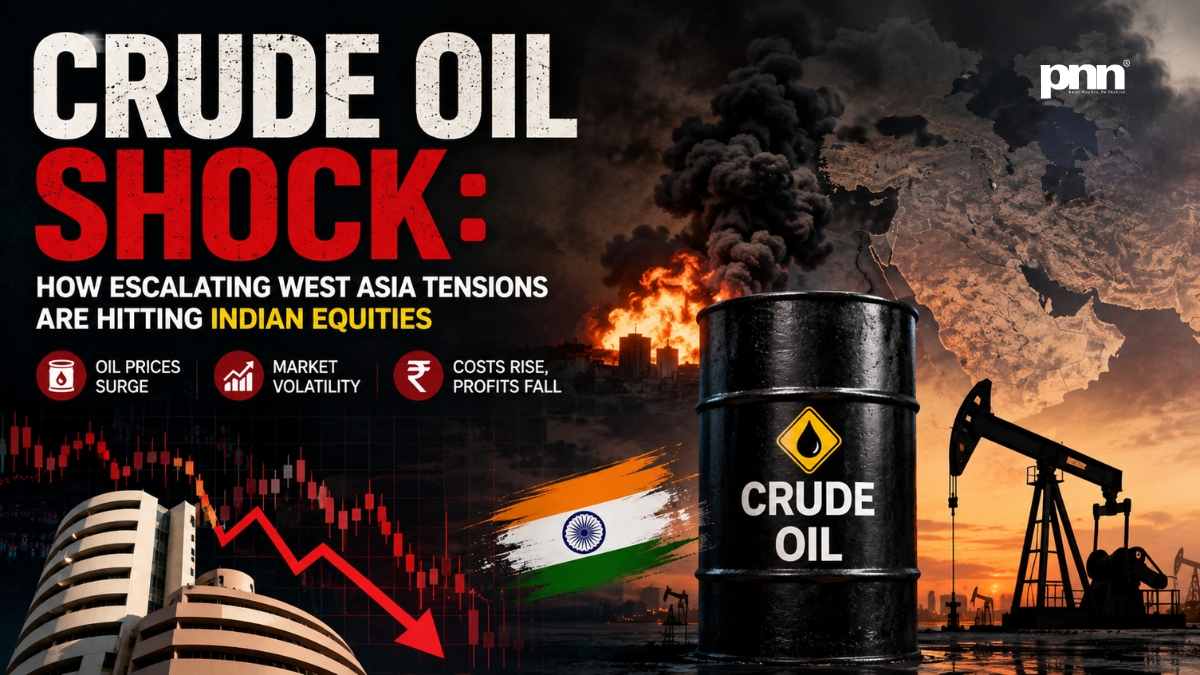
Mumbai (Maharashtra) [India], July 22: Every time fighting breaks out near the Strait of Hormuz, market nerves flare up in Mumbai. It’s not just a figure of speech — Dalal Street feels every shock from that patch of water thousands of kilometers away.
Brent crude spiked almost 14% in just four days, breaking past $85 a barrel after the US and Israel clashed with Iran. It had been hanging around $72 at the start of the month — so, a 19% jump in under three weeks. For India, which buys more than 85% of its oil from overseas, a move like that doesn’t stay on some distant chart. It lands directly on the stock exchange.
Foreign investors were barely getting comfortable again. They’d just completed an eight-day buying streak, their longest since May 2025, when the crude rally sent them stampeding for the exit. In just four sessions, foreign portfolio investors pulled out over ₹7,400 crore — ₹4,200 crore of that in one day. And the bigger picture is worse: FPIs yanked more than ₹2.6 trillion out of Indian stocks in 2026 alone — the largest yearly outflow ever. March saw over a trillion rupees gone in just one month, driven by the same West Asia drama pushing oil prices higher.
Nobody should call it surprising. We saw the same moves back in October 2024, when Brent crossed $79 and Sensex dropped 800 points in a day. In March 2026, the index slid for six straight weeks — one afternoon wiped out 1,800 points while Brent hovered near $107. Everyone knows the drill by now.
Why does oil shake up India this badly? That’s simple math. Every $10 bump in crude blows up India’s current account deficit, drags the rupee lower, and pushes inflation higher. Suddenly, the Reserve Bank has less space to cut rates. A higher oil bill means India hunts for more dollars, and that weakens the rupee even more. Foreign investors watch this dance closely before they commit. Kranthi Bathini of WealthMills Securities says the pressure’s visible each time Brent gets over $80. India’s volatility index (VIX) crossing 13 tells you traders are reaching for their seatbelts, not yawning away another routine day.
Of course, the pain isn’t shared equally. Some sectors catch the worst of it:
- Airlines feel the pinch fastest – Jet fuel is their biggest expense, so every dollar hike hurts their margins.
- Paint and chemicals companies – like Asian Paints and Pidilite — use crude as a feedstock. Margins shrink.
- Tyre makers are next. Apollo Tyres, MRF, and the like use crude-based rubber, so their costs rise too.
- Auto companies suffer — both because their own costs go up and because pricier fuel can scare off buyers.
- Oil marketing companies (IOC, BPCL, HPCL) face a classic squeeze. They can’t instantly hike pump prices, so their refining margins take a hit.
Some players, though, actually do better when oil shoots up:
- Upstream companies like ONGC and Oil India benefit — they sell at higher prices.
- IT and pharma, mostly dollar earners with little oil exposure, stay resilient when these shocks roll through.
- Gold and government bonds turn into safety nets — money leaving stocks often lands here.
Crisil flagged this months ago. India’s direct trade with Israel or Iran is tiny (think rice exports), but the bigger hit comes indirectly, through costlier energy and affected sectors like aviation and chemicals.
Honestly, the script hasn’t changed much. Look at October 2024, January 2026, March, and now July: crude jumps after West Asia boils over, the rupee slides, FPIs pull money, and Sensex and Nifty open lower. Then come the talking heads, picking apart whether investors have overreacted.
As for the immediate outlook, market strategists say Nifty’s still on decent ground as long as it holds above 24,000. A good monsoon and steady corporate earnings are helping, for now. But if oil keeps rising or if the Strait of Hormuz closes? All bets are off.
For regular investors, like someone sticking to a monthly mutual fund SIP or holding a basket of stocks, this isn’t the time to panic and sell blind. Geopolitical scares create drama but usually pass quickly — unless war actually blocks oil flow. What matters more is balance. Look at how much you have in oil-sensitive names (aviation, paints, autos) and how much is in steadier sectors like IT, pharma, or upstream energy.
The current Israel-Iran tension could cool off just like it has before. For now, until West Asia stops making headlines, Indian markets will keep stalking the price of crude almost as closely as they watch earnings.
