

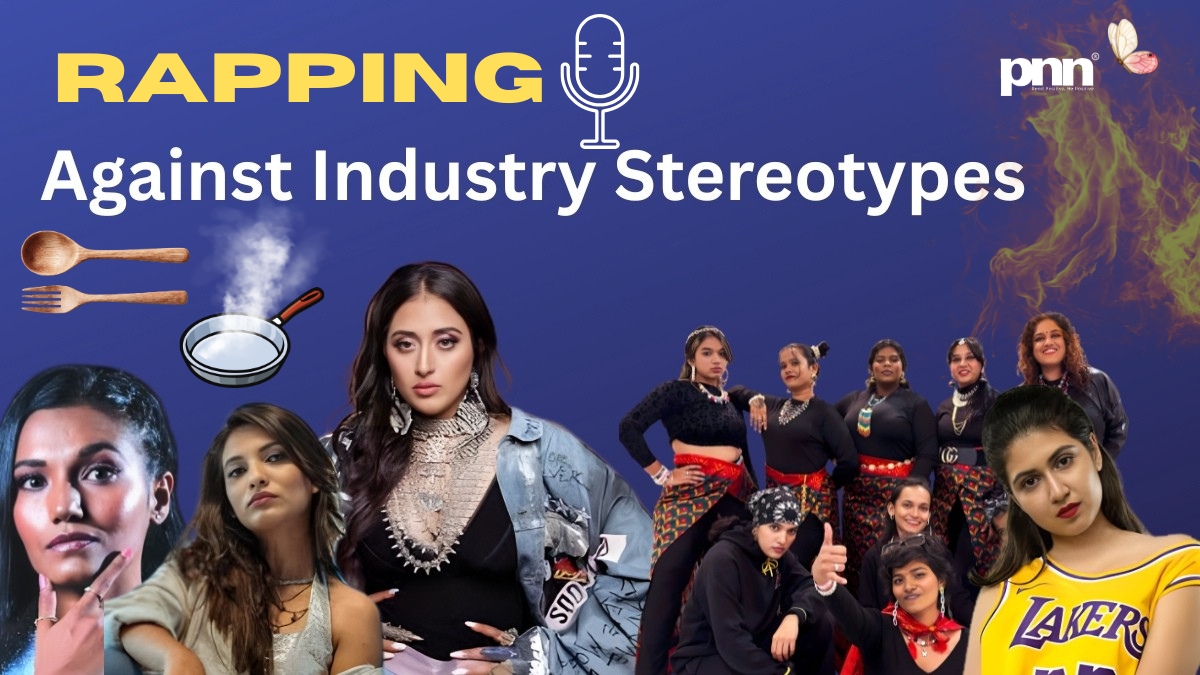
Mumbai (Maharashtra) [India], January 9: Maybe a score years or a decade ago, boys would listen to Rakim and J. Cole, and girls would listen to Lady Gaga. That was all. The time when India was still reluctant about rap culture. Guys here and there were listening to Baba Sehgal and Bohemia tracks, where the lyrics were brutal, and the genre seemed misogynistic to most of us. Cuss in lyrics and buzz for objectifying women, and a hammer still missing, one that would shatter the glass ceiling. A few flop tracks about social change were choking on their own beats, but nothing more substantial than a diaphanous hope that women would be a part of a culture that would erringly sneak into their clothes. But a lot has changed in the past couple of years. Queens too rule the scene now; nevertheless, the number of streams doesn’t matter for change makers, as the fight is all about slapping your own listener’s mindset before you bag it as a fan.
Breaking Historical Stereotypes
In the streets of a country where women were judged for listening to music, producing music of your own is bravery in itself. It’s nothing less than a rebellion; a revolution indeed. Historically, women in Indian hip-hop were boxed into narrow stereotypes: seen as stylistic novelties, confined to melodic hooks, or expected to prioritise image over lyrical substance. That framing is increasingly untenable, largely because women artists have produced bodies of work that demonstrate range, discipline and leadership.
Artists Redefining Authority Through Key Projects
Raja Kumari
Raja Kumari was among the earliest boss ladies to smother the stereotype that women rappers could not lead the line at a global or entrepreneurial level. Her collaboration with Divine, the poster boy of Indian hip-hop, and two Grammy nominations that have been roaring her name, say a lot about her prowess. Her EP Curry Sauce and later projects, such as Bloodline and Kashi to Kailash, fused Indian classical references with contemporary hip-hop while maintaining ownership and creative control. Her story is proof that more women should get out of the kitchen bars, and cook aspirations for the global arena; it’s not her alone, it’s a revival of Indian women’s psyche that strives for better dreams with bigger leaps. Beyond music, her founding of Godmother Records positioned her as an industry shaper, not merely a performer, challenging the notion that women require male-led systems to scale; they are no longer a subaltern.
Dee MC
Dee MC emerged from Mumbai’s live cypher and battle rap circuit, breaking the illusions that women lack credibility in competitive and battle hip-hop spaces. Her discography, work on projects like Khudi, and her role as a mentor and judge on the reality show, MTV Hustle, reconstructed her identity, not as a fragile, naïve woman, but as a billboard for women as technical rappers and educators. She normalised the presence of women as authorities in lyricism, performance and critique.
Wild Wild Women
The Mumbai-based collective Wild Wild Women directly countered the stereotype that women in hip-hop lack collective power. Their debut EP, Uddu Azad, and subsequent live showcases foregrounded themes of labour, autonomy and resistance. By operating as a cohesive unit rather than isolated acts, the group demonstrated that collaboration among women could be central to the culture rather than peripheral. The group’s international concerts show a lot about what they actually represent and how Indian women, too, connect with the global woes.
Meba Ofilia
From Shillong, Meba Ofilia’s discography peevishly challenged the outdated norm that Indian hip-hop must conform to a single sonic identity. Her projects, including Kaleidoscope and Climbing Trees, blended rap with soul and R&B, emphasizing emotional depth without sacrificing genre credibility, that’s what art of any kind must do, she transports the listeners as one must do. Her international recognition reinforced that vulnerability and musical hybridity are compatible with hip-hop authority.
Mrunal Shankar
Mrunal Shankar’s rise disrupted the stereotype that women rely on provocation or controversy for visibility. Projects such as Album 17 and tracks like Guddi highlighted technical precision, multilingual writing and consistency. Her performance on MTV Hustle 2.0 further established her as a disciplined lyricist with mainstream and independent appeal.
SIRI
SIRI from Bengaluru broke both linguistic and gender barriers with Kannada-language projects such as Avalanna, challenging the dominance of Hindi and English in Indian hip-hop. Her work asserted that regional language rap by women could carry cultural weight and contemporary relevance.
Hard Kaur
Hard Kaur, despite later controversies, played a formative role in breaking early narratives and fragile stereotypes. Songs like Ek Glassy and Move Your Body brought female rap voices into mainstream film music in the 2000s, challenging the belief that women could not stride into commercial hip-hop spaces at scale.
Reble and Mahi G
Artists such as Reble, with projects like Sheher, and Mahi G, whose work centres on tribal identity and marginalisation, further ruptured the clumsy class and caste-based assumptions. Their music reaffirmed hip-hop’s function as social documentation rather than as image-driven entertainment designed to garner numbers and charts.
Conclusion
Indian women hip-hop artists are no longer waiting for male approval; they are chiselling their own rope-ways to escalate their voices to the top, and they are ready to appear on the global charts too. Their works are a timeless testimony of how the one-sided gender narrative has been made to collapse throughout the years. Collectively, these projects have reshaped the Indian hip-hop story and altered how authority is defined within it. Female rappers are no longer subscribing to the idea that they are temporary or symbolic inclusions in the scene. They are lyricists, performers, mentors, entrepreneurs and cultural commentators whose work shapes the genre’s sound, economics and values. The stereotype of women as secondary voices is steadily eroding, replaced by a more grounded reality: women are part of the structure, not the exception.
